As discussed in the main article — From Foam to Fiber: Why Investing in a Bagasse Tableware Production Line Is the Smartest Move for Your Business
— transitioning from plastic or foam products to sustainable bagasse tableware is not only an eco-conscious decision but also a highly profitable one. However, to fully grasp the potential of this green revolution, it’s essential to understand how bagasse tableware is actually made.
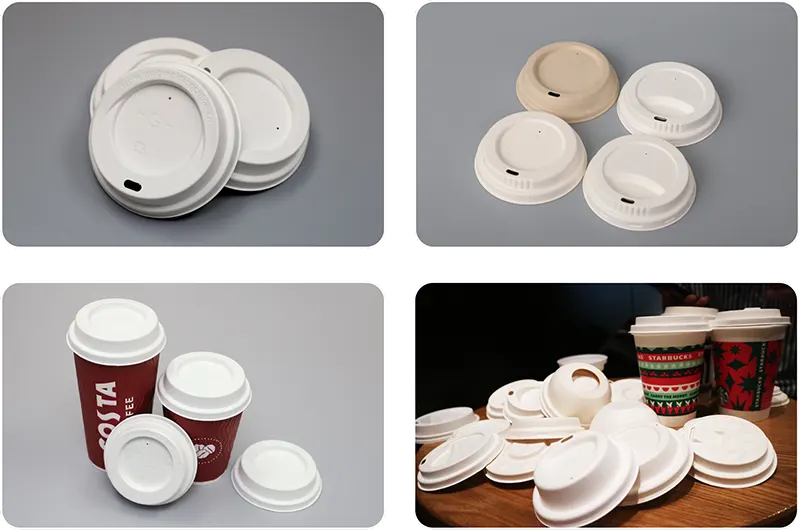
Below, we break down the bagasse tableware production process step-by-step, showing how sugarcane waste is transformed into durable, biodegradable plates, bowls, and containers ready for the market.
1. Raw Material Preparation — Turning Sugarcane Waste into Pulp
The process begins with bagasse, the fibrous residue left after sugarcane juice extraction. Instead of being burned or discarded, this agricultural byproduct becomes the foundation for eco-friendly tableware.
Cleaning & Screening: Bagasse is cleaned to remove dust, sand, and impurities.
Pulping: The clean bagasse fibers are mixed with water and processed in a pulper. This breaks down the fibers into a soft, uniform pulp slurry.
Refining: The pulp is refined and adjusted to the right concentration and fiber length, ensuring good forming and strength properties.
💡 Tip: The quality of the pulp directly determines the smoothness and strength of the final tableware. Consistent fiber distribution is crucial at this stage.
2. Pulp Forming — Shaping the Tableware
Once the pulp is ready, it moves into the forming system of the production line.
Forming Mold Design: Each tableware shape (plate, cup, clamshell box, etc.) has a unique forming mold.
Vacuum Forming: Pulp is drawn onto the forming mold using a vacuum system. Water is drained, and a thin layer of pulp remains, taking the desired shape.
Precision Control: Automatic PLC systems manage pulp concentration, vacuum pressure, and forming time for optimal uniformity.
At this point, the product is still wet and fragile — known as the “wet blank.”
3. Wet Pressing or Hot Pressing — Strengthening the Product
The wet blanks are transferred to a hot pressing machine, where they undergo thermal molding.
Temperature & Pressure: Using precise temperature (150–200°C) and pressure settings, the mold dries and compresses the product.
Surface Finishing: This step solidifies the structure, smooths the surface, and enhances strength.
Optional Coating: A food-grade waterproof coating (often PLA or natural starch-based) can be applied for hot or oily food resistance.
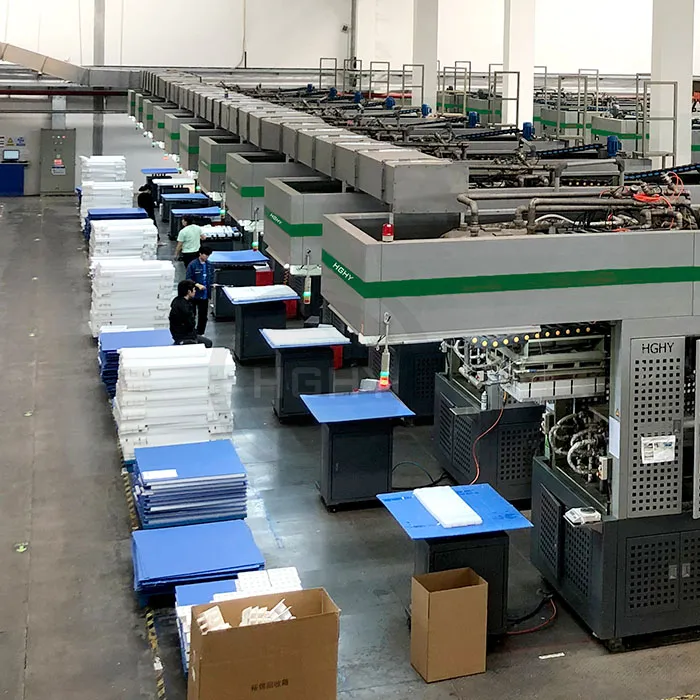
Advanced lines, such as those from HGHY Pulp Molding Systems, use integrated forming and hot-press technology, improving accuracy, efficiency, and product quality.
4. Trimming & Edge Cutting — Achieving the Perfect Shape
After pressing, the tableware edges may have slight irregularities. Automatic trimming machines cut off excess fiber to ensure a neat, uniform appearance.
Offline or Inline Trimming: Depending on production scale, trimming can be fully automated and synchronized with the forming process.
Waste Recovery: The trimmed fiber waste is recycled back into the pulping system — ensuring zero material waste.
5. Sterilization & Quality Inspection
For food-grade applications, hygiene is paramount.
Sterilization: Products are UV-sterilized or heat-treated to eliminate bacteria.
Inspection: Automated optical systems or human quality checks ensure every item meets standards for shape, strength, and cleanliness.
Sorting: Products are categorized by size, shape, and quality for final packaging.
6. Packaging & Storage
Finally, the finished tableware is packaged in environmentally friendly cartons and ready for shipment.
Stacking & Counting: Automatic systems stack and count items for packaging consistency.
Eco-Packaging: Using recyclable or biodegradable materials aligns with the sustainable vision of the entire production chain.
Warehousing: Products are stored in a dry, ventilated environment before being distributed to wholesalers, restaurants, or retail brands.
7. Optional Additions — Customization & Branding
Modern bagasse tableware lines can include optional processes like:
- Logo embossing or engraving on molds
- Coloring with food-safe natural dyes
- Customized mold design for brand differentiation
These features allow businesses to elevate their brand while maintaining eco-friendliness.
HGHY Equipment: Ensuring Compliance, Quality, and Recyclability
HGHY’s Bagasse Tableware Production Line is specifically engineered to produce fully compliant and recyclable pulp-molded products that meet the world’s strictest environmental and food safety regulations.
Key Features Include:
- Precision Molding Technology: Guarantees smooth surfaces and uniform thickness for FDA/EU-certified quality.
- Integrated Pulping and Hot Pressing System: Eliminates chemical additives while ensuring product strength and hygiene.
- Temperature and Pressure Control Systems: Maintain optimal fiber density for safe, odor-free, food-contact performance.
- Sustainable Production Design: Low water consumption, closed-loop pulp recovery, and energy-efficient drying reduce the plant’s carbon footprint.
- By choosing HGHY’s high-performance bagasse production line, manufacturers can confidently produce tableware that is eco-certified, export-ready, and market-approved worldwide.
Conclusion: From Waste to Worth
The bagasse tableware production process is a brilliant example of circular economy in action — turning agricultural waste into a high-value, eco-friendly product that meets modern market demand.
Understanding each step — from bagasse pulping to hot pressing and packaging — helps investors and manufacturers optimize their production efficiency and product quality.
How a Pulp Molding Machine Works?
Choose HGHY
HGHY stands as a pioneering high-tech enterprise in China, committed to the research, development, and production of paper molding equipment. With close to three decades of practical experience in project management, our goal is to build cutting-edge machinery. Our service footprint extends across over 60 countries and regions worldwide, having successfully delivered over 1,000 sets of equipment and served more than 10,000 satisfied customers.
No experience required - Helps You Build a Factory
HGHY offers personalized, complimentary consulting services to clients. We assist in designing and planning your entire factory layout, tailor products to your specific requirements, and dispatch engineers to your country for equipment installation and troubleshooting. Additionally, we provide training and ongoing technical support, all backed by a lifetime service guarantee for HGHY equipment.
Our Cases
The pulp molding production line represents the future of sustainable manufacturing — transforming waste paper or agricultural residues into valuable, biodegradable packaging.
It combines eco-friendliness, cost efficiency, and technological innovation, making it an ideal investment for companies seeking both profitability and environmental responsibility.
By adopting advanced systems such as rotary, reciprocating, or thermoforming pulp molding machines, manufacturers can not only meet global environmental standards but also build a strong, future-ready packaging business.