
Walk through any serious tableware factory floor today and you’ll notice something. The conversation isn’t “how do we make more?” anymore. It’s “how do we make the same thing, the same way, every single time?”
That shift is quietly changing how established Indian tableware brands think about equipment. Manual and semi-manual lines got a lot of them started. But more and more of them are asking the same question: what got us here won’t get us to the next stage, so what will?
Here’s what’s pushing them toward automation.
1. Bigger customers want sameness
When a brand is small, a few variations between batches don’t cause much trouble. Once you start supplying hotel chains, food delivery platforms, airlines, caterers or export buyers, that changes completely.
These buyers don’t just want good plates. They want the thousandth plate to look exactly like the first. Same thickness, same edge, same finish, same stacking behavior. Hand-fed forming, hand-moved drying and hand-checked trimming make that level of repeatability hard to hold, especially at volume.
Automatic lines take much of that variation out of the process. For a brand trying to win and keep larger accounts, that’s often the deciding factor.
2. Labor is a cost, but also a risk
Cheap labor is one of India’s well-known advantages, and it’s tempting to build a business plan around it. But anyone who has run a factory knows the real issue isn’t just the wage bill.
It’s absenteeism on festival weeks. It’s training someone for a month, then losing them to a competitor. It’s one unskilled shift producing a noticeably worse batch than the shift before. A line that depends on many hands is a line that depends on many things going right at once.
Automation doesn’t remove people from the factory, but it reduces how much the output depends on any one of them. Brands that have felt that pain tend to upgrade sooner than the ones that haven’t.
3. The plastic-free market got serious
India’s restrictions on identified single-use plastic items gave plant-fiber tableware a real push, and it’s no longer an experimental category. Restaurants, event planners and retailers now ask for it by default, and they expect it to arrive on time, in volume, and in consistent quality.
Growing demand is great, until you can’t meet it. A brand that has to turn down orders, or stretches deadlines because its line maxes out, hands that business to someone with more capacity. Established players know this, and expansion plans increasingly start with the production line rather than the sales team.
4. Margins get decided on the factory floor
In a crowded market, you can’t always raise prices, but you can lower your cost per piece. That’s where the maths of automation becomes hard to ignore.
When you count labor, rejects, rework, energy and downtime together, a manual line’s total cost per unit is often higher than it first appears. Brands that sit down and calculate this honestly tend to find that automation isn’t a luxury. It’s the path to better margins when competition gets tighter.
5. Compliance and reputation travel together
Food-contact products come with expectations around cleanliness and process control. Fewer hand-touches along the way means fewer contamination risks and fewer arguments with auditors. For brands that export, or want to, a cleaner and more documented production process is a real advantage.
A tidy, controlled line also says something to visiting buyers before anyone opens a sample box. It signals that the brand is serious.
What this looks like in practice
For brands looking at molded fiber specifically, one example worth a look is the HGHY Fully Automatic Tableware Machine. I’ll stick to what HGHY publicly lists rather than make big promises:
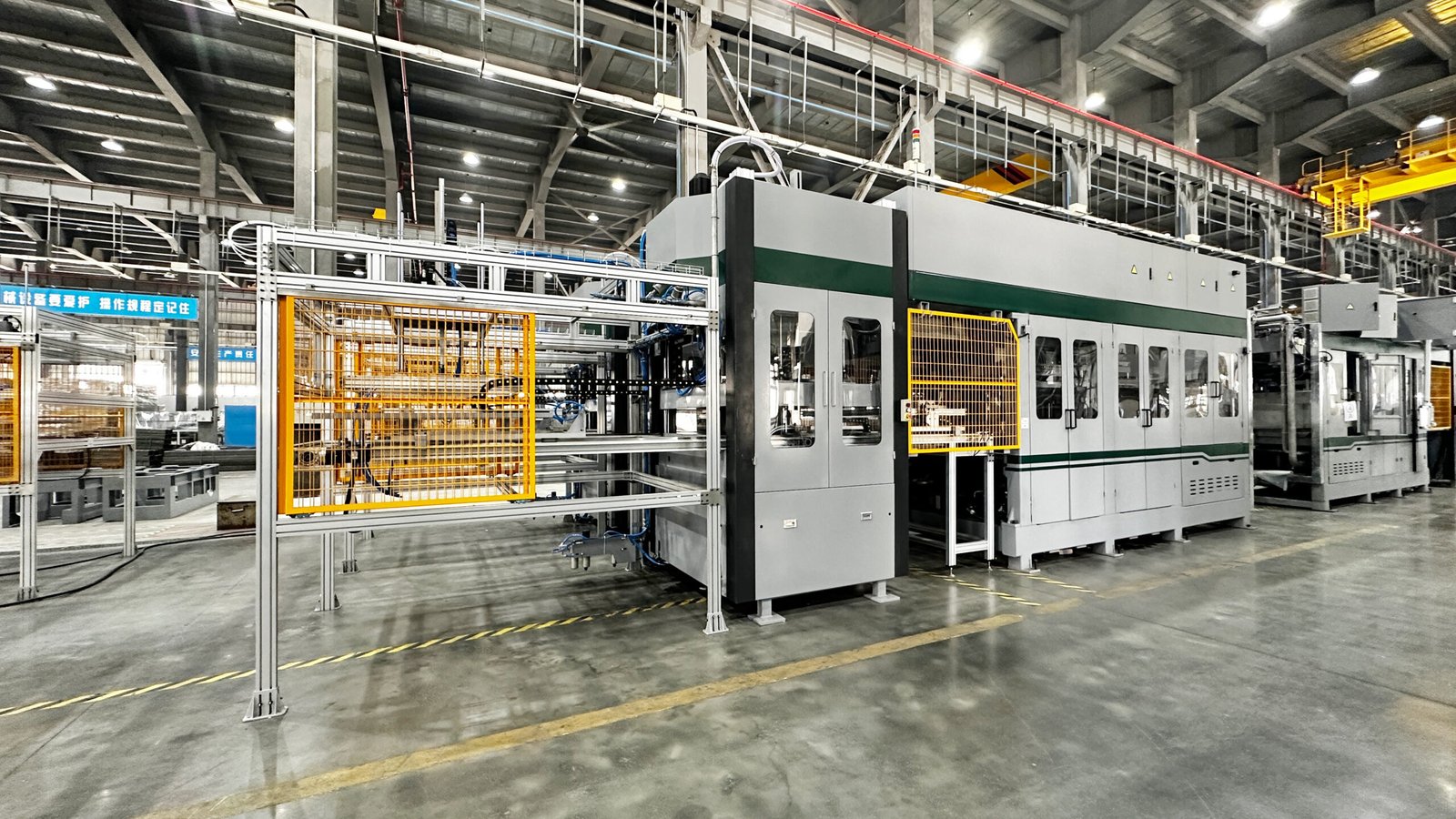
- Small crew per shift. Their tableware line details mention roughly 3 to 4 operators per shift, which is a very different staffing picture from a hand-driven setup.
- Running-cost focus. HGHY highlights energy saving as a design priority, and describes a water-recycling approach in the process, both of which matter once utilities are a real part of your monthly cost.
- Support for new users. The supplier lists installation guidance, test running and operator training, along with a one-year warranty after installation. For a team moving to automation for the first time, that support can shorten a painful learning curve.
- Consistent output. Automated forming, drying and trimming are what bring batch-to-batch repeatability within reach.
Of course, it isn’t a plug-and-play purchase. A fully automatic line needs the right workshop space, enough power, and a steady raw material supply. Brands that upgrade successfully usually plan these things before the machine arrives, not after.
A quick checklist before upgrading
If you’re weighing the move yourself, here are a few questions worth answering first:
- What is our real cost per piece today, including rejects and rework?
- Which customers have we lost, or couldn’t pursue, because of capacity or quality?
- How much extra volume could we sell in the next 12 months if capacity wasn’t the limit?
- Is our workshop ready in terms of space, power and raw material flow?
If the answers point the same direction, you probably already know what to do.
Final thought
Brands don’t upgrade to automatic lines because it’s fashionable. They do it because at some point the old way starts costing more than the new one: in lost orders, uneven quality, tired teams and thin margins.
The brands moving early aren’t just buying machines. They’re buying the ability to say yes to bigger orders, and to deliver them the same way every time.
Thinking about moving from manual to automatic? Take a look at HGHY’s fully automatic tableware solutions and talk to their team about what fits your volume and budget.