A Deep Dive into Fiber Treatment, Slurry Screening, Dewatering, and Surface Smoothness
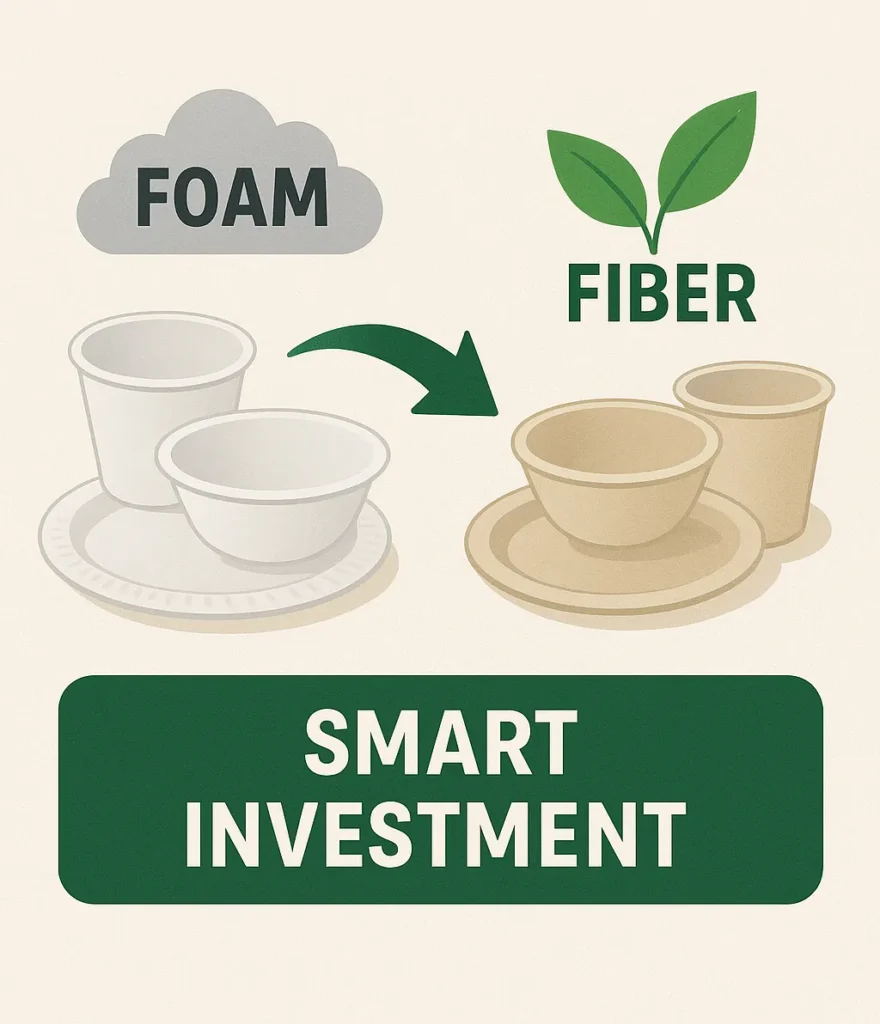
As global manufacturers shift from petroleum-based foam to plant-based fiber, bagasse tableware production lines are becoming the gold standard for eco-friendly packaging. But the true competitiveness of any production line depends not only on equipment—it depends on pulp quality. High-quality bagasse pulp directly determines product strength, surface smoothness, forming stability, and yield rate.
This chapter explores practical and industrial-grade methods for improving bagasse pulp quality, focusing on four core areas: fiber treatment, slurry screening & cleaning, dewatering efficiency, and surface finishing performance.
1. Fiber Treatment: Building the Foundation of Strong Tableware
High-quality tableware begins with uniform, flexible, and well-refined fibers. Bagasse contains long fibers, short fibers, pith, and silica-rich residues, which require proper conditioning.
1.1 Mechanical Refining for Stronger Fiber Bonding
Mechanical refining aims to:
Improve fiber softness and flexibility
Increase bonding points between fibers
Create a better water-retention structure during forming
Best practices:
Use a double-disc refiner with controlled plate gap (0.15–0.25 mm)
Target a freeness level: 350–450 mL CSF for tableware forming
Avoid over-refining, which causes excessive fines and weakens finished product strength
Result:
Stronger, denser products with improved edge strength and reduced cracking after hot pressing.
1.2 Enzymatic Treatment for Cleaner, Flexible Fibers
Enzymes (xylanase, cellulase, hemicellulase) gently break down non-cellulose components.
Benefits:
Reduces pith and impurities
Improves drainage consistency
Enhances fiber bonding without damaging length
Lowers refining energy consumption by 10–20%
This treatment is especially useful for factories seeking high-end tableware with smooth surfaces.
2. Slurry Screening & Cleaning: Removing What Shouldn’t Be There
Even the best fiber treatment cannot compensate for poor slurry cleanliness. Bagasse pulp naturally contains sand, pith, wax, and undigested fiber bundles.
2.1 Multi-Stage Screening
- Typical screening configuration:
- Coarse screen (1.5–2.0 mm) – removes fiber clumps
- Fine screen (0.15–0.25 mm) – filters out waxes and small contaminants
Pressure screen – ensures uniform slurry before forming
Why it matters:
Clean pulp = reduced pinholes, smoother surfaces, fewer black spots, and fewer defects in the final plate or bowl.
2.2 Centrifugal Cleaning for Sand & Heavy Impurities
Hydrocyclones are critical in bagasse pulp preparation because sugarcane fields introduce:
- Soil
- Sand
- Silica particles
Centrifugal cleaning removes these heavy impurities, preventing:
- Mold abrasion
- Black specks
- Unwanted rough texture
Well-cleaned pulp increases mold lifespan by 20–40%.
3. Dewatering Efficiency: Essential for Smooth Forming & Consistent Hot Pressing
Efficient dewatering directly impacts:
- Forming speed
- Moisture uniformity
- Hot-press energy consumption
- Surface texture
3.1 Enhancing Drainage During Forming
Improve slurry drainage by:
- Keeping fiber fraction between 0.8%–1.2%
- Optimizing vacuum pressure (−0.05 to −0.07 MPa)
- Maintaining good fiber dispersion
Proper drainage ensures that pulp forms evenly on the mold, preventing:
- Fiber clumps
- Weak spots
- Uneven thickness
3.2 Controlling Final Moisture Before Hot Pressing
Ideal moisture content before heat pressing: 55–65%.
Too wet → steam marks, blistering
Too dry → insufficient bonding, cracking
A well-calibrated dewatering system lowers energy use by 10–18% and increases molding stability.
4. Surface Smoothness: The Key to Premium Tableware
Surface quality is one of the biggest differentiators between commodity-grade and premium-grade bagasse tableware.
4.1 Improving Smoothness Through Slurry Control
Smooth surfaces depend on:
- Low pith content
- Proper fines control
- Stable slurry viscosity
- Fine screening
A low-impurity slurry ensures the fiber layer transfers smoothly to the mold.
4.2 Mold Quality & Hot-Press Precision
The hot press determines the final tactile quality.
Key parameters:
- Mold polishing (mirror level for premium products)
- Temperature: 160–200°C depending on product thickness
- Pressure uniformity across the platen
- Pressing time: 12–40 seconds depending on shape
High-end molds can improve product smoothness by 30–50%.
Conclusion: Pulp Quality Is the Hidden Engine Behind Profitable Bagasse Tableware Production
In the broader context of the main theme From Foam to Fiber, upgrading to a bagasse tableware production line is only the first step. The true profitability lies in mastering pulp preparation:
- Fiber treatment improves strength and forming stability
- Screening & cleaning ensures purity and visual quality
- Dewatering control enhances efficiency and reduces defects
- Surface optimization creates the premium feel consumers demand
Manufacturers that invest in these quality-improvement steps routinely achieve:
- Higher yield
- Lower defect rates
- Better brand reputation
- Stronger competitiveness against plastic and foam products