Hospitals and device manufacturers are under the same pressure retail packaging buyers have been dealing with for years, just arriving a few years later: plastic trays, blister packs, and rigid inserts used for sterile instruments, diagnostic kits, and pharmaceutical products are increasingly falling under the same waste-reduction scrutiny that pushed foodservice packaging toward fiber years ago. The difference is that healthcare packaging has to hit a much higher bar — dimensional precision, contamination control, structural rigidity around delicate instruments — before a fiber-based alternative is even worth evaluating. That’s exactly the gap a molded fiber healthcare container line is built to close.
If you’re sourcing this kind of equipment for the first time, it helps to understand what separates a machine capable of holding tight medical-grade tolerances from a general packaging line that happens to also make trays.
What a Molded Fiber Healthcare Container Line Actually Produces
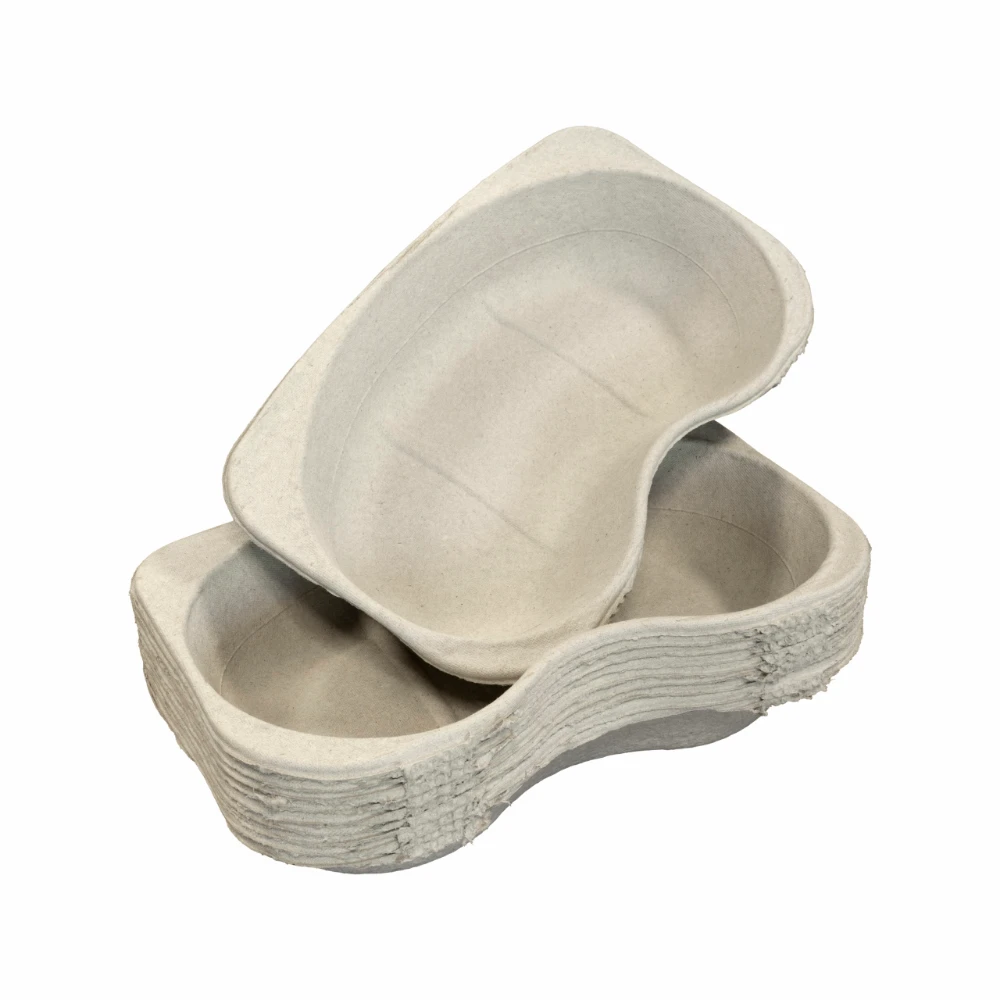
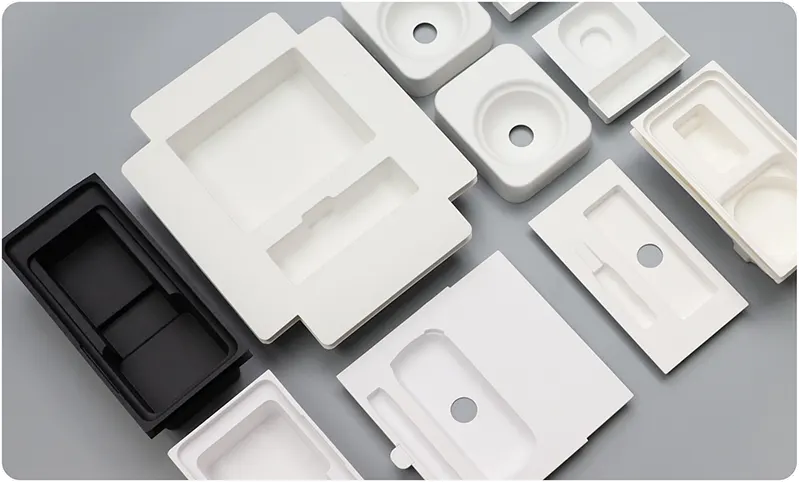
Unlike commodity tableware or egg trays, healthcare containers usually need to hold a specific shape precisely — a diagnostic kit insert with recessed slots for vials, a device tray with raised ribs to immobilize an instrument during shipping, or sterile packaging with clean, consistent wall thickness so it doesn’t compromise a sterilization barrier. The forming process starts the same way as any pulp molding line — bagasse, bamboo, or wood pulp slurry is drawn through a vacuum-formed mold to create the wet part — but the tolerances required downstream are what actually determine whether a line is suitable for healthcare use.
The process typically runs through pulp preparation, a deflaker and refiner stage to break down and disperse the cellulose fibers evenly, forming under vacuum suction, and then hot pressing to set the final dimensions and surface finish. For healthcare and other high-end packaging applications, forming and hot pressing are usually combined into a single station rather than run as separate steps, which reduces the handling and transfer that can distort a part before it’s fully set.
The Engineering Differences That Matter for Medical-Grade Trays
Three design details separate equipment that can reliably hold healthcare packaging tolerances from equipment that can’t.
Forming and hot-pressing as one integrated stage. Running these as a combined process, rather than forming the part and then moving it to a separate press, cuts down on the transfer distortion that shows up as inconsistent wall thickness — a real problem when a tray needs to nest instruments securely or maintain a sterile barrier. This is a meaningful upgrade over older two-stage designs still common on lower-cost lines.
Undercut and negative-angle capability. A lot of healthcare tray geometry — recessed slots to hold ampoules upright, ribbing to immobilize an instrument, snap-fit lid features — requires the mold to produce shapes with negative draft angles, not just simple tapered walls. A line that can only form straight-draft shapes will force your product design to compromise around the equipment’s limitations rather than the other way around. Look specifically for suppliers who can demonstrate forming parts at less than zero degrees of draft, not just standard tapered trays.
Off-line auto trimming. Trimming the wet or dried part separately from the forming station, rather than trying to trim in-line, keeps the forming cycle time independent of trim complexity. For healthcare trays with intricate edge profiles or multiple cavities, this matters more than it does for a flat plate — it means adding trim complexity for a new tray design doesn’t slow down the whole line’s output rate.
Position, pressure, and temperature control precision. Medical trays are far less forgiving of dimensional drift than commodity tableware. A line where mold position, hot-press pressure, and temperature can all be adjusted with fine precision — not just set to a handful of preset levels — is what actually lets you hold consistent tolerances across a full production run and across different tray designs as your product line grows.
What the Technical Specifications Look Like
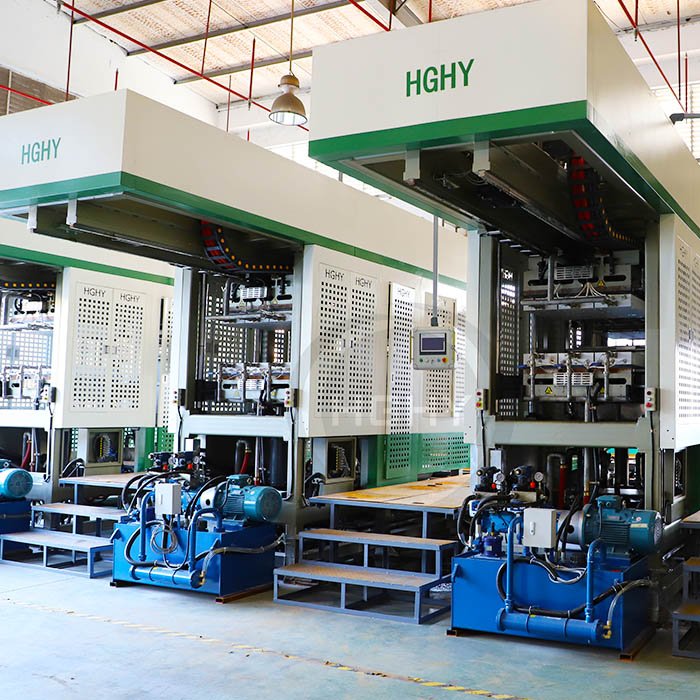
For reference, here are the specifications of the ZJWD-9575 Pulp Molded Medical Tray Making Machine, a line currently built for exactly this kind of high-tolerance, high-end molded fiber packaging:
| Parameter | Specification |
|---|---|
| Product Application | Molded fiber healthcare containers, medical trays, inner packaging for 3C digital products, premium gift boxes, cosmetics |
| Platen Size | 950 × 750 mm |
| Heating Energy | Electricity or thermal oil |
| Forming Method | Reciprocating |
| Hot-Press Method / Pressure | Hydraulic system, max 30 tons |
| Max Product Height / Thickness | 115 mm / 1.2 mm |
| Safety Protection | Self-locking and auto-stop design |
The 115mm maximum product height is worth noting specifically — it’s tall enough to handle deeper instrument trays and multi-cavity kit inserts, not just flat lidding stock. And the dual heating energy option (electricity or thermal oil) gives buyers flexibility depending on what utility infrastructure is already in place at the plant site, which matters more than it sounds like once you’re pricing out installation costs against local energy rates.
Why Healthcare Packaging Is a Strong Fit for This Investment Category
Medical device and pharmaceutical packaging has three characteristics that make it a genuinely attractive segment for molded fiber equipment, not just an adjacent market to chase.
Regulatory and procurement pressure is building from both directions. Hospital systems and healthcare group purchasing organizations are increasingly writing sustainability requirements into procurement contracts, while device manufacturers are facing the same plastic-reduction regulatory trends already reshaping consumer packaging. Unlike foodservice packaging, healthcare buyers aren’t just switching for cost — they’re often switching because a contract requires it, which makes demand less price-sensitive and more durable.
Margins run higher than commodity tableware. A molded fiber tray that replaces a precision plastic insert or blister pack sells at a materially different price point than a disposable plate, because it’s solving a harder engineering problem and going into a supply chain that already pays a premium for reliability and validated packaging. Equipment capable of holding the tolerances this segment demands earns that premium back faster than equipment limited to commodity products.
The switching decision is sticky once qualified. Medical packaging typically goes through a validation process before it’s approved for use with a given device or product — once a fiber tray design passes that validation, the buyer has strong incentive to stick with the supplier who can reliably reproduce it, rather than re-qualifying a new design every time they shop for a lower unit price. That translates into longer, more stable order relationships for whoever holds the qualified production line.
Due Diligence Questions Worth Asking
Push past the platen size and tonnage numbers and ask what actually determines whether this line will hold up in a validated healthcare supply chain.
Can the supplier demonstrate negative-draft-angle parts running in production, not just in a lab sample? Ask for a video of the specific undercut geometry your tray design needs, not a generic promotional reel.
What’s the actual dimensional repeatability across a full production run, and can the supplier share tolerance data from an existing healthcare or high-end packaging client? A machine that holds tight tolerance on the first hundred units but drifts by unit five thousand is not suitable for a validated medical application.
What does installation and commissioning actually involve? For reference, a supplier with an established track record in this category typically quotes production timelines around 130 days from order and deposit, with installation support running 60 to 90 days depending on the number of machines purchased — numbers worth benchmarking any quote against.
What’s the supplier’s real-world payback period, based on existing clients rather than a theoretical model? Established suppliers in this equipment category report payback periods in the range of two to three years for buyers running the line at reasonable utilization — a useful sanity check against any ROI projection a sales team hands you.
The Bottom Line
A molded fiber healthcare container line sits at the intersection of two durable trends: regulatory and procurement pressure pushing plastic out of medical packaging, and a genuine engineering bar that keeps low-cost, low-precision equipment from competing effectively in this segment. For buyers willing to evaluate forming precision, undercut capability, and dimensional repeatability as carefully as they’d evaluate any medical-grade production equipment, this is one of the more defensible niches in the broader molded fiber packaging market — higher margin, stickier customer relationships, and demand that isn’t dependent on any single region’s plastic ban timeline. The ZJWD-9575 specification page is a reasonable benchmark to compare against other quotes in this category.