
Most buyers start with price and output per hour. The questions that decide whether a plant is easy or painful to run come later: how much power will it draw, how many people does each shift need, and does the building actually fit the line? A wrong answer to any of these can mean a transformer upgrade, extra hiring or a layout redesign after the machines have already arrived.
This article explains how to read the technical side of an egg crate (egg tray) production line, what drives power use, labor and floor space, and which numbers to request from a supplier before you sign. It does not quote figures for any specific machine, because they vary widely with configuration, so it focuses on how to ask for them and check them.
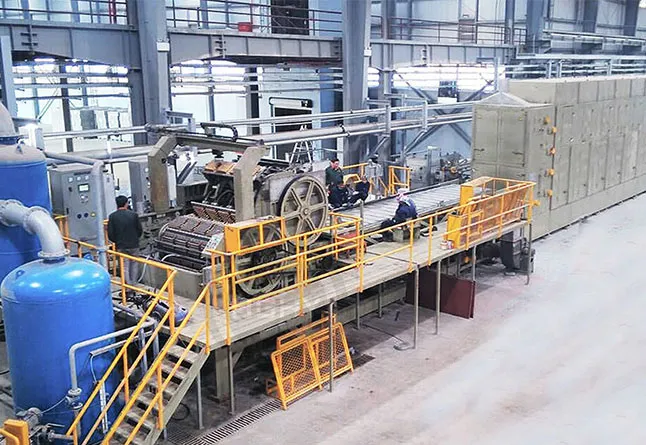
Why the spec sheet is only a starting point
A specification sheet usually shows rated output, installed motor power and a footprint. Those are useful but incomplete. Rated output is a best-case number, installed power is not the same as the power actually consumed, and a footprint often covers one machine rather than the whole line with its tanks, conveyors, storage and walkways.
Treat the sheet as a list of questions. For each figure, ask how it was measured, under what conditions, and whether it covers the full line.
Power consumption
Where the electricity goes
In a pulp molding line, electricity is used by several groups of equipment:
- Pulping: the pulper, pumps and agitators that turn waste paper into pulp
- Forming: vacuum pumps, hydraulic or pneumatic systems and drive motors, which usually make up a large share of the load
- Drying: fans, blowers and conveyors, plus heaters if the dryer is electric
- Hot-pressing and finishing: heating elements, presses and trimming equipment
- Auxiliary systems: water circulation, compressed air, lighting and control cabinets
The vacuum system and the dryer are the two places where design differences have the biggest effect on the electricity bill.
Electricity is not the whole energy bill
If the dryer burns natural gas, biomass, diesel or coal, that fuel is a separate and often larger cost than electricity. When comparing quotes, make sure each supplier states electricity use and fuel use separately, for the same product and the same output. A line that looks efficient on electricity alone may simply have moved its energy use to fuel.
Connected load vs. running load
Installed (connected) power is the sum of all motor ratings. Machines rarely run every motor at full load at the same time, so actual consumption is lower. You need both numbers: the connected load tells you what supply capacity to prepare, and the running load tells you what you will pay for. Also ask for the voltage, phase and frequency the line requires, and confirm that they match your local supply.
A simple way to estimate cost per 1,000 pieces
Divide the average power draw by hourly output, then multiply by your electricity price. The numbers below are hypothetical and only show the method:
| Item | Example value |
|---|---|
| Average electrical load | 80 kW |
| Output | 4,000 trays per hour |
| Electricity per 1,000 trays | 80 ÷ 4 = 20 kWh |
| Electricity price | 0.10 per kWh |
| Electricity cost per 1,000 trays | 20 × 0.10 = 2.00 |
Repeat the same calculation for fuel. Then ask the supplier to fill in the same table with their own measured values from a trial run on your raw material. Compare suppliers on cost per 1,000 pieces, not on motor kilowatts.
Practical points
- Ask whether the control system can switch idle motors off or reduce their speed when the line is waiting.
- Check the power factor and whether you need compensation equipment.
- Confirm your supply can handle start-up currents, and that your transformer and cabling have enough capacity with some margin for expansion.
Labor requirements
Labor depends on the level of automation and on how the line is laid out, so the right question is not “how many workers” but “which tasks are done by hand”. For a typical line, the stations to review are:
- Raw material handling: loading waste paper into the pulper and removing contaminants
- Pulp preparation: monitoring consistency and adding chemicals if used
- Forming: watching the machine, handling faults and changing molds
- Drying: loading, unloading and monitoring temperature
- Hot-pressing and finishing: feeding, trimming, quality checks
- Counting, stacking and packing
- Maintenance and cleaning
Semi-automatic lines tend to need people at the transfer, stacking and packing stages. Fully automatic lines move people from repetitive handling to monitoring and maintenance, which means fewer workers but higher skill requirements. Ask the supplier for a staffing plan per shift for your target output, with each task listed. Then check it against your local labor cost and your ability to hire and train operators.
Do not forget shifts. A line that runs around the clock needs several crews, plus cover for leave and breaks.
Workshop space
Think in zones
An egg crate line does not occupy one rectangle. Plan separate zones and the routes between them:
- Raw material storage for waste paper, with room for deliveries and sorting
- Pulping area with tanks and pumps
- Forming machine area
- Drying line, which is often the longest part of the layout
- Hot-pressing and finishing area
- Packing area and finished goods storage
- Water circulation or treatment area
- Mold storage and a maintenance workspace
Storage is bigger than you expect
Egg trays and cartons are light but bulky. Even when they nest together, finished goods take up a lot of volume compared with their weight. Many first-time buyers plan carefully for the machines and then run short of warehouse space. Estimate how many days of production you want to store and size the area from that.
Building requirements
Ask the supplier for a layout drawing and a foundation drawing, and check these points against your building:
- Ceiling height, especially for the drying line, hot press and any overhead equipment
- Floor load capacity and flatness, and what foundations are needed under heavy machines
- Drainage, since pulping and forming use water
- Ventilation and exhaust, including a chimney if the dryer burns fuel
- Fire safety, because waste paper and dryers create fire risk
- Door sizes and access for delivering and installing large equipment
- Space for forklifts or pallet trucks, and for truck loading
Leave room for expansion. Adding a second line or a hot press later is much easier if the layout allows for it from the start.
Utilities at a glance
| Utility | What to confirm |
|---|---|
| Electricity | Connected load, running load, voltage, phase, frequency, transformer capacity |
| Fuel | Type, consumption per hour and per 1,000 pieces, storage and safety rules |
| Water | Fresh water demand, circulation system, wastewater discharge requirements |
| Compressed air | Pressure, flow rate, compressor size |
| Environment | Dust, noise, exhaust emissions and local regulations |
Documents to request from a supplier
- A complete equipment list with motor power and operating load for each item
- A line layout drawing and foundation drawings
- A utility consumption table for electricity, fuel, water and air
- A staffing plan per shift for your target output
- Trial run records on your raw material, with measured output, energy use and reject rate
- Warranty terms and a list of recommended spare parts
FAQ
Is installed power the same as power consumption?
No. Installed power is the total motor rating and shows what supply you need. Actual consumption depends on how the line runs, so ask for measured figures.
How many workers does an egg crate line need?
It depends on automation level, product and output. Ask the supplier for a task-by-task plan for each shift instead of a single headcount.
How much space should I plan for?
Plan for the whole line, including pulping, drying, finishing, packing and storage, not just the forming machine. A supplier’s layout drawing is the best starting point.
Can I reduce energy cost after installation?
Yes, to a degree. Improving dryer insulation, heat recovery, stable moisture control and keeping the line running at steady output all help, but the biggest gains come from choosing the right design at the start.
Power, labor and floor space rarely appear in the headline of a quotation, yet they shape your daily operating cost for years. Ask for measured numbers, compare suppliers on cost per 1,000 pieces, and check the layout against your real building before you place an order.
If you are planning an egg crate production line, send us your target product, daily output and workshop dimensions. We will provide a layout drawing, a utility list and a staffing plan for your project.